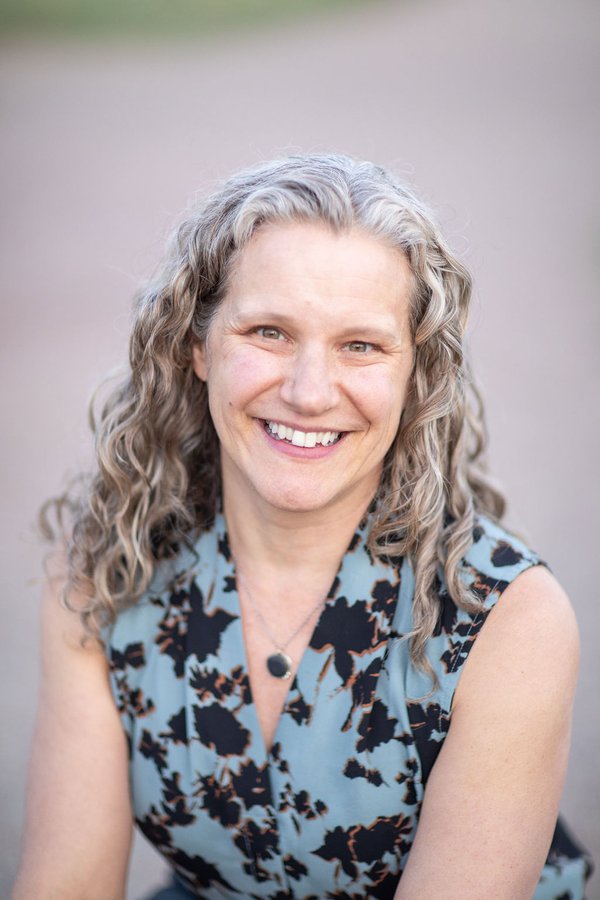
I work fractionally with pre-Series A biotech and healthcare companies to build the financial models and commercial narratives that give investors and partners what they need to decide.
My career spans university technology transfer, corporate strategy at a public diagnostics company, and independent consulting — always at the intersection of science, finance, and commercial strategy. I work with founders who need senior-level thinking at a critical moment, without the full-time cost.
Pro forma models and patient-based forecasts that clarify your business for investors and partners — grounded in primary research, not assumptions.
Delivered as documented, assumption-transparent models your team continues to use.
Market sizing, payer discovery, and go-to-market planning grounded in what payers and providers actually say.
Delivered as usable playbooks and analyses, structured for your data room.
From partnership search through term sheet, negotiation, and alliance management — with a proven track record at every scale.
Alliance structures and operating models built to run without me.
I work with pre-Series A life science and healthcare companies when vision needs to become investment-grade strategy. Every engagement produces tangible deliverables — models, analyses, and playbooks structured for your investor data room — that your team owns and continues to use after our work together ends.
A financial model is how investors understand your business. I build governance-ready models grounded in primary research — patient-based, assumption-transparent, and structured so your team can maintain and update them independently.
I use AI tools to accelerate research and data compilation efficiently. Every key assumption is verified against primary sources and domain expertise — so your budget goes further without sacrificing rigor.
Built a patient-based revenue forecast and multi-channel payer pricing model for a Phase 3 therapeutics company — grounded in primary payer and provider interviews and used in their Series A fundraising process.
Before you can model the revenue, you have to understand the market. I combine quantitative analysis with primary customer research — interviewing payers, providers, and potential partners — to build commercial strategies grounded in what the market actually looks like.
Payer and provider interviews for a CNS therapeutics company reshaped both the revenue model and Phase 3 trial endpoint design — substantiating the investment story with real-world evidence.
Strategic partnerships can define a company's trajectory. I've structured deals from term sheet through closing — and managed the alliances that followed — at every scale, from university spinout to publicly traded company.
Payer and provider interviews for a CNS therapeutics company informed both the revenue model and Phase 3 trial endpoint design – substantiating the investment case with market evidence.
Four projects across financial modeling, commercial strategy, and partnerships — each producing deliverables the client continued to use long after the engagement ended.
A seed-stage CNS company needed more than a spreadsheet — they needed a defensible, investor-ready financial model grounded in real market evidence. I built it from first principles, combining primary payer and provider research with a rigorous patient-based revenue forecast.
A genomics tools company had strong technology and growing customer interest — but little to show investors yet. The revenue potential was there, just invisible in early-stage evaluation data. I built a model that made it visible.
I was tasked with transforming an existing strategic alliance into a new product launch, bringing a proteomic diagnostics platform to market in Japan. I built the financial forecast and business case, negotiated the deal terms and led the implementation through to market launch.
Before I was a consultant, I was a founder. As the marketing and financial lead at Roving Planet — one of the first wireless LAN security companies — I owned the business plan, financial model, and due diligence process for a Series A fundraising round.
The founding team had deep scientific expertise but no commercial infrastructure. They needed to validate their revenue assumptions with primary market research and translate that into a financial model that would hold up under investor scrutiny — without the budget for a full-time commercial team.
The company entered their Series A process with a financial model grounded in primary research — one their team could defend assumption-by-assumption. The provider interviews also surfaced insights that directly informed Phase 3 trial endpoint design, a deliverable that extended well beyond the financial model itself.
Working on a similar challenge?
Let's talk →All supporting analysis is documented professionally and structured for inclusion in an investor data room.
The team could only show investors very small revenue from product evaluations. They needed to credibly paint a picture of the revenue streams that could realistically emerge from that evaluation activity — across five distinct product lines, custom development projects, and sporadic but potentially large clinical diagnostic conversions.
The model gave the team a credible, detailed picture of where their revenue could go — grounded in the evaluation activity they already had. It became their primary tool for investor conversations and internal planning, structured to be updated by the team as their pipeline evolved.
Working on a similar challenge?
Let's talk →All supporting analysis is documented professionally and structured for inclusion in an investor data room.
The company had a long-standing relationship with a Japanese partner but needed a new commercial structure to allow for development and commercialization of clinical diagnostics. The opportunity required building a compelling financial case for a complex, first-of-its-kind diagnostics launch in an unfamiliar market – and securing Board-level commitment.
The alliance closed and launched on schedule. The financial model I built became the ongoing tool for internal resource allocation and executive communication throughout the partnership.
Working on a similar challenge?
Let's talk →All supporting analysis is documented professionally and structured for inclusion in an investor data room.
We were building a new product category in a rapidly shifting technology landscape. The financial model had to make the case for a market that didn't fully exist yet, while remaining credible to sophisticated investors who would stress-test every assumption.
Roving Planet closed its Series A. After my departure, the company went on to raise an additional $20M and was acquired by 3Com. The experience gave me a founder's understanding of what a financial model is really for — not to predict the future, but to demonstrate disciplined thinking and keep the whole team aligned as circumstances change.
Working on a similar challenge?
Let's talk →All supporting analysis is documented professionally and structured for inclusion in an investor data room.
Practical perspectives on financial modeling, fundraising, and commercial strategy for early-stage biotech and healthcare companies.
TABA funding is one of the most underutilized line items in federal grant proposals. Most agencies allow up to $50,000 in Phase 2. Here's how to scope a project that makes the highest impact — and produces deliverables your company keeps.
Read articleThe JP Morgan Healthcare Conference is the year's most important BD event for life sciences. Here's a practical week-by-week framework for how business development leaders can make the most of the months before the conference.
Read article